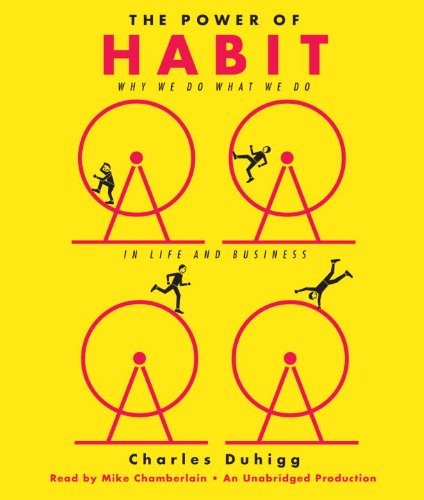
The Power of Habit: Why We Do What We Do in Life and Business Charles Duhigg
by Charles Duhigg
What this book is, and who it's for
Charles Duhigg's 2012 book is the foundational diagnostic for behavior change — the book that introduced the cue-routine-reward loop to a popular audience and made it impossible to look at your own habits the same way again. Duhigg interweaves the neuroscience with case studies (Alcoa's safety transformation, Procter & Gamble's Febreze launch, civil-rights organizing) to show how the same loop operates at individual, organizational, and societal scales. Read this BEFORE Atomic Habits: Clear's book is the build manual that Duhigg's book makes the build worth attempting. Identify the cue, you can interrupt the routine. Don't see the cue, the routine wins.
How to read this book. Each chapter below is a ~30-second summary — the core insight, no filler. Open the chapters that grab you. If the book resonates, buy the full edition on Amazon (link at bottom). Affiliate-disclosed, geo-redirected to your local Amazon (amazon.nl, amazon.de, amazon.co.uk, etc.).
Opening
Chapters
- Chapter 1THE HABIT LOOP0.5 min
- Chapter 2THE CRAVING BRAIN0.5 min
- Chapter 3THE GOLDEN RULE OF HABIT CHANGE0.5 min
- Chapter 4KEYSTONE HABITS, OR THE BALLAD OF PAUL O’NEILL0.5 min
- Chapter 5STARBUCKS AND THE HABIT OF SUCCESS0.5 min
- Chapter 6THE POWER OF A CRISIS0.5 min
- Chapter 7HOW TARGET KNOWS WHAT YOU WANT BEFORE YOU DO0.5 min
- Chapter 8SADDLEBACK CHURCH AND THE MONTGOMERY BUS BOYCOTT0.5 min
- Chapter 9THE NEUROLOGY OF FREE WILL0.5 min
Closing & reference
The Power of Habit pairs well with
A single book is an argument. A stack is a curriculum. The Power of Habit appears in this curated reading path — each pairs it with 3 other books that sharpen its ideas, in a suggested reading order.
From Read Stacks · Learn
How to get more out of this book
Two short essays on the meta-skill — what chapter summaries actually preserve, and the six retention techniques that decide whether what you read here is still useful six months from now.
- Are book summaries actually useful, or am I just cheating?
Chapter summaries are a navigation tool, not a substitute. Used right, they help you read more books fully — by helping you avoid the wrong ones. Used wrong, they're a comfort blanket that lets you feel like you're reading without engaging with the material.
6 min read
- I read a lot of books but can't remember anything. What works?
Forgetting most of what you read is normal, not a personal failing — your brain wasn't designed to retain prose at the rate modern readers consume it. The practices that DO work share one thing: they force you to USE the material instead of just consuming it. Six specific techniques, each tested across decades.
7 min read
Want one curated stack a week in your inbox? Subscribe to the free weekly stack →