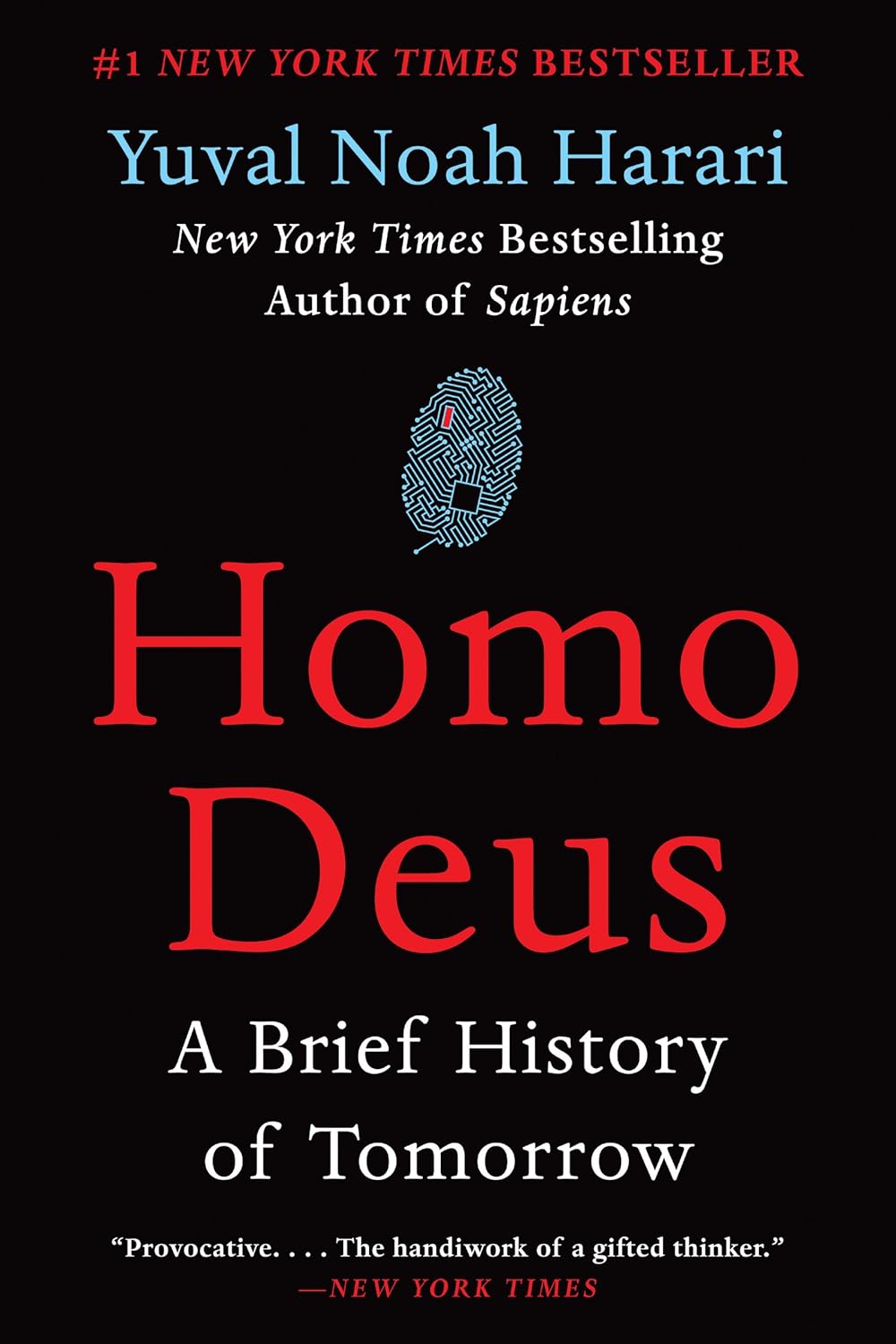
Homo Deus: A Brief History of Tomorrow
Chapter summary from Homo Deus by Yuval Noah Harari.
Acknowledgements remind you that “a single author” is usually a convenient fiction. Behind the voice sits a network: editors who cut and sharpen, researchers who chase facts, colleagues who argue, friends who notice blind spots.
In a book about intersubjective realities—shared stories that coordinate large groups—this matters. The production of ideas is also collective. A manuscript is shaped by conversations, institutions, and invisible labor.
The section also works as a tonal release. After chapters that question human agency and elevate algorithms, gratitude pulls the focus back to ordinary human dependence: we learn through other people, and we build by borrowing.
If the future threatens to make individuals feel smaller, acknowledgements quietly insist on a different truth: intelligence is often communal, and clarity is rarely achieved alone.
A 30-second summary — and that's the point. Read Stacks chapters are deliberately short. The full Homo Deus edition has the examples, the longer argument, and the moments worth re-reading. If this resonated, the Amazon link below buys the actual book and supports the author.
One chapter a week — curated, not algorithm-picked.
If this resonated, the free weekly Read Stacks email sends one curated 4-book stack with the chapter we'd open first. No spam, unsubscribe anytime.
Homo Deus is part of this curated reading path — each pairing it with 3 other books that sharpen the same idea:
From Read Stacks · Learn
If you just read a chapter summary…
You're using the navigation tool the way it was designed to be used. Two short essays on the meta-skill — what summaries actually preserve, and the six retention techniques that decide whether what you just read is still useful six months from now.
- Are book summaries actually useful, or am I just cheating?
Chapter summaries are a navigation tool, not a substitute. Used right, they help you read more books fully — by helping you avoid the wrong ones. Used wrong, they're a comfort blanket that lets you feel like you're reading without engaging with the material.
6 min read
- I read a lot of books but can't remember anything. What works?
Forgetting most of what you read is normal, not a personal failing — your brain wasn't designed to retain prose at the rate modern readers consume it. The practices that DO work share one thing: they force you to USE the material instead of just consuming it. Six specific techniques, each tested across decades.
7 min read