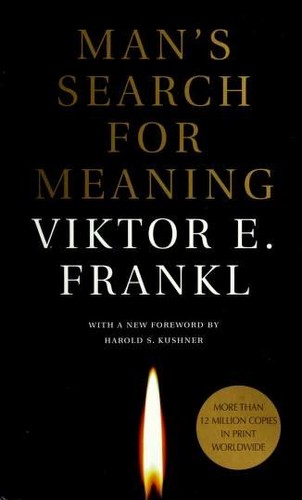
The Will to Meaning
Chapter summary from Man’s Search for Meaning by Viktor E. Frankl.
The primary motive described here is the drive to find a reason to live—something that makes effort and suffering intelligible.
This is not a sentimental claim. It is tested against the reality that people can endure extreme hardship when they have a “why” that feels concrete and binding.
Meaning is also presented as personal: it cannot be outsourced, and it cannot be replaced by someone else’s values.
When a person loses contact with meaning, the problem is not only mood. It is direction. Without direction, everything becomes heavier.
A 30-second summary — and that's the point. Read Stacks chapters are deliberately short. The full Man’s Search for Meaning edition has the examples, the longer argument, and the moments worth re-reading. If this resonated, the Amazon link below buys the actual book and supports the author.
One chapter a week — curated, not algorithm-picked.
If this resonated, the free weekly Read Stacks email sends one curated 4-book stack with the chapter we'd open first. No spam, unsubscribe anytime.
Man’s Search for Meaning is part of this curated reading path — each pairing it with 3 other books that sharpen the same idea:
From Read Stacks · Learn
If you just read a chapter summary…
You're using the navigation tool the way it was designed to be used. Two short essays on the meta-skill — what summaries actually preserve, and the six retention techniques that decide whether what you just read is still useful six months from now.
- Are book summaries actually useful, or am I just cheating?
Chapter summaries are a navigation tool, not a substitute. Used right, they help you read more books fully — by helping you avoid the wrong ones. Used wrong, they're a comfort blanket that lets you feel like you're reading without engaging with the material.
6 min read
- I read a lot of books but can't remember anything. What works?
Forgetting most of what you read is normal, not a personal failing — your brain wasn't designed to retain prose at the rate modern readers consume it. The practices that DO work share one thing: they force you to USE the material instead of just consuming it. Six specific techniques, each tested across decades.
7 min read