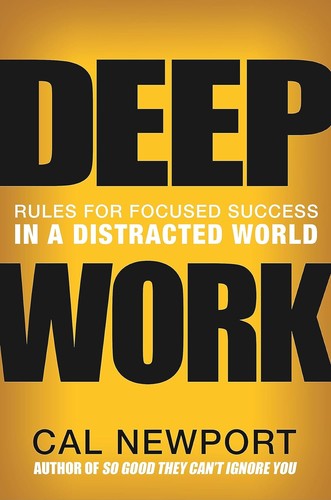
Deep Work
by Cal Newport
What this book is, and who it's for
Cal Newport's 2016 thesis is that the ability to focus without distraction on a cognitively demanding task is becoming simultaneously more economically valuable AND more rare. The book makes two arguments: deep work is the source of all elite-level expertise (with research to back the claim); and the modern knowledge-worker environment is structurally designed to prevent it. Newport's prescription is uncomfortable: schedule deep work like meetings, treat shallow work as the budgeted minority, and accept the social costs of being unavailable. Read this if your job rewards thinking but your week makes thinking impossible.
How to read this book. Each chapter below is a ~30-second summary — the core insight, no filler. Open the chapters that grab you. If the book resonates, buy the full edition on Amazon (link at bottom). Affiliate-disclosed, geo-redirected to your local Amazon (amazon.nl, amazon.de, amazon.co.uk, etc.).
Opening
Chapters
Closing & reference
Deep Work pairs well with
A single book is an argument. A stack is a curriculum. Deep Work appears in this curated reading path — each pairs it with 3 other books that sharpen its ideas, in a suggested reading order.
From Read Stacks · Learn
How to get more out of this book
Two short essays on the meta-skill — what chapter summaries actually preserve, and the six retention techniques that decide whether what you read here is still useful six months from now.
- Are book summaries actually useful, or am I just cheating?
Chapter summaries are a navigation tool, not a substitute. Used right, they help you read more books fully — by helping you avoid the wrong ones. Used wrong, they're a comfort blanket that lets you feel like you're reading without engaging with the material.
6 min read
- I read a lot of books but can't remember anything. What works?
Forgetting most of what you read is normal, not a personal failing — your brain wasn't designed to retain prose at the rate modern readers consume it. The practices that DO work share one thing: they force you to USE the material instead of just consuming it. Six specific techniques, each tested across decades.
7 min read
Want one curated stack a week in your inbox? Subscribe to the free weekly stack →